How Gamification Can Transform Engagement in Pharmaceutical Cycle Meetings
Discover how gamification boosts engagement, retention and field readiness in pharmaceutical Cycle Meetings.
Cycle Meetings are one of the most important moments in the calendar of pharmaceutical and MedTech sales organisations. They bring teams together to align on strategy, introduce new products, reinforce key messages and prepare representatives for the months ahead. But while the content is often critical, keeping people actively engaged throughout the event is not always easy.
A Cycle Meeting can involve hours of presentations, keynotes, workshops and discussions. Even when the information is highly relevant, a predominantly presentation-based format turns participants into passive listeners. Attention drops, interaction is limited, and once the meeting ends, some of the knowledge shared is quickly forgotten.
This is why more organisations are making Cycle Meetings interactive. Gamification turns the audience from passive attendees into active participants, while creating opportunities to reinforce knowledge and measure engagement throughout the event.
From passive presentations to active participation
The value of gamification in a Cycle Meeting isn't that it makes the event more entertaining. The real potential is in changing how participants interact with the content.
Instead of moving from one presentation to the next, teams can be challenged to put what they have just heard into practice. A short mobile challenge can follow an important product session, asking participants to answer questions on the key messages, clinical information or strategy just discussed. Everyone plays from their own phone, in the short breaks the agenda already has.
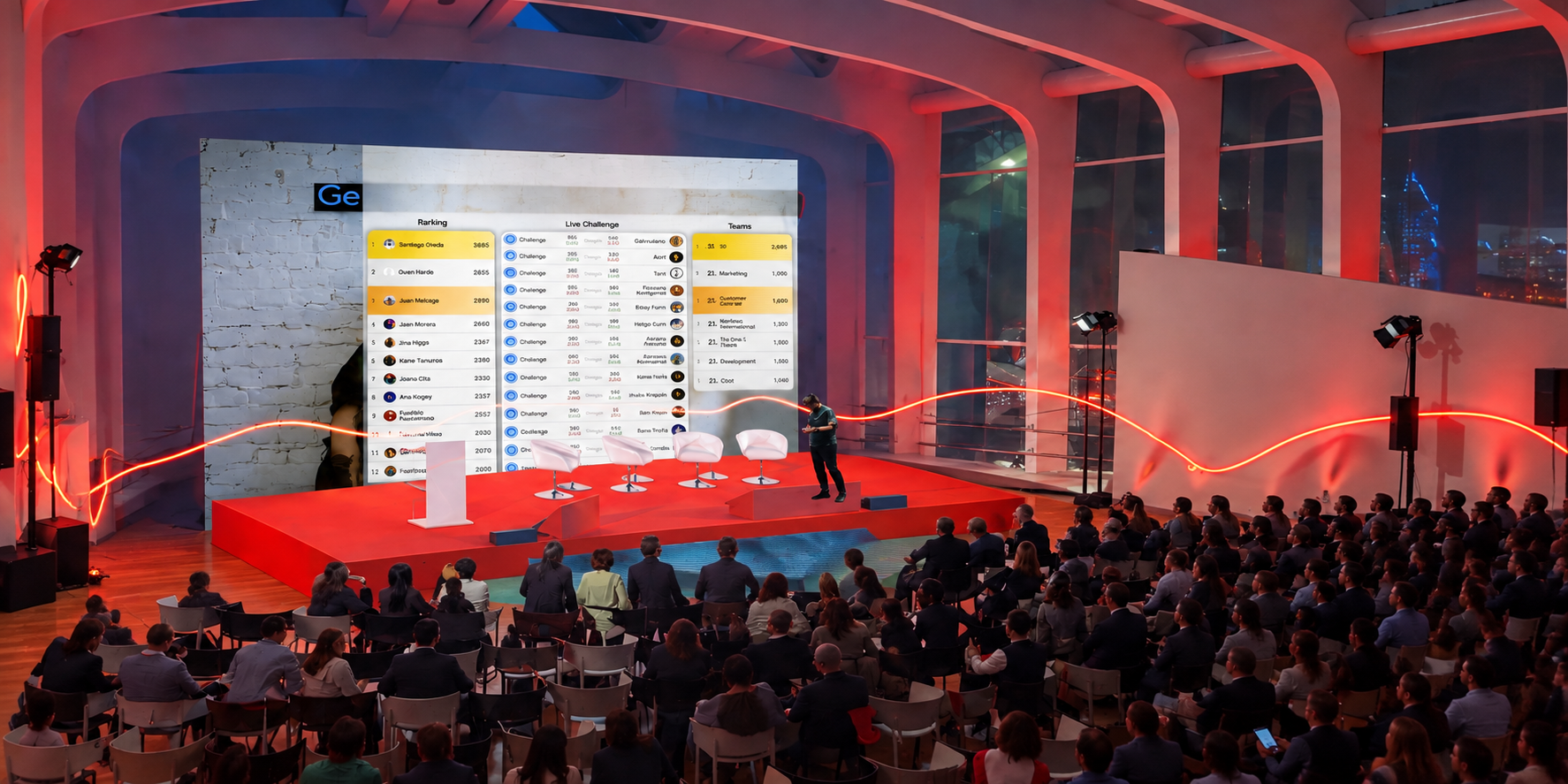
The dynamic changes almost instantly. Participants are no longer just listening; they are testing their understanding, comparing their results with colleagues and actively engaging with the information. With Atrivity, these game mechanics work across face-to-face, virtual or hybrid events, introduced between key sessions without turning the whole meeting into a game. Participants can compete individually or as teams, with rankings creating a sense of momentum. For large sales forces, this is particularly effective at creating a shared experience across regions, teams and territories, exactly the moments Atrivity is built for, given that reps pick up their phones around 60 times a day, 40 of those for less than two minutes.
Using a Cycle Meeting to understand what teams really know
There is another reason gamification is valuable during a pharmaceutical Cycle Meeting: it captures information about knowledge that presentations cannot.
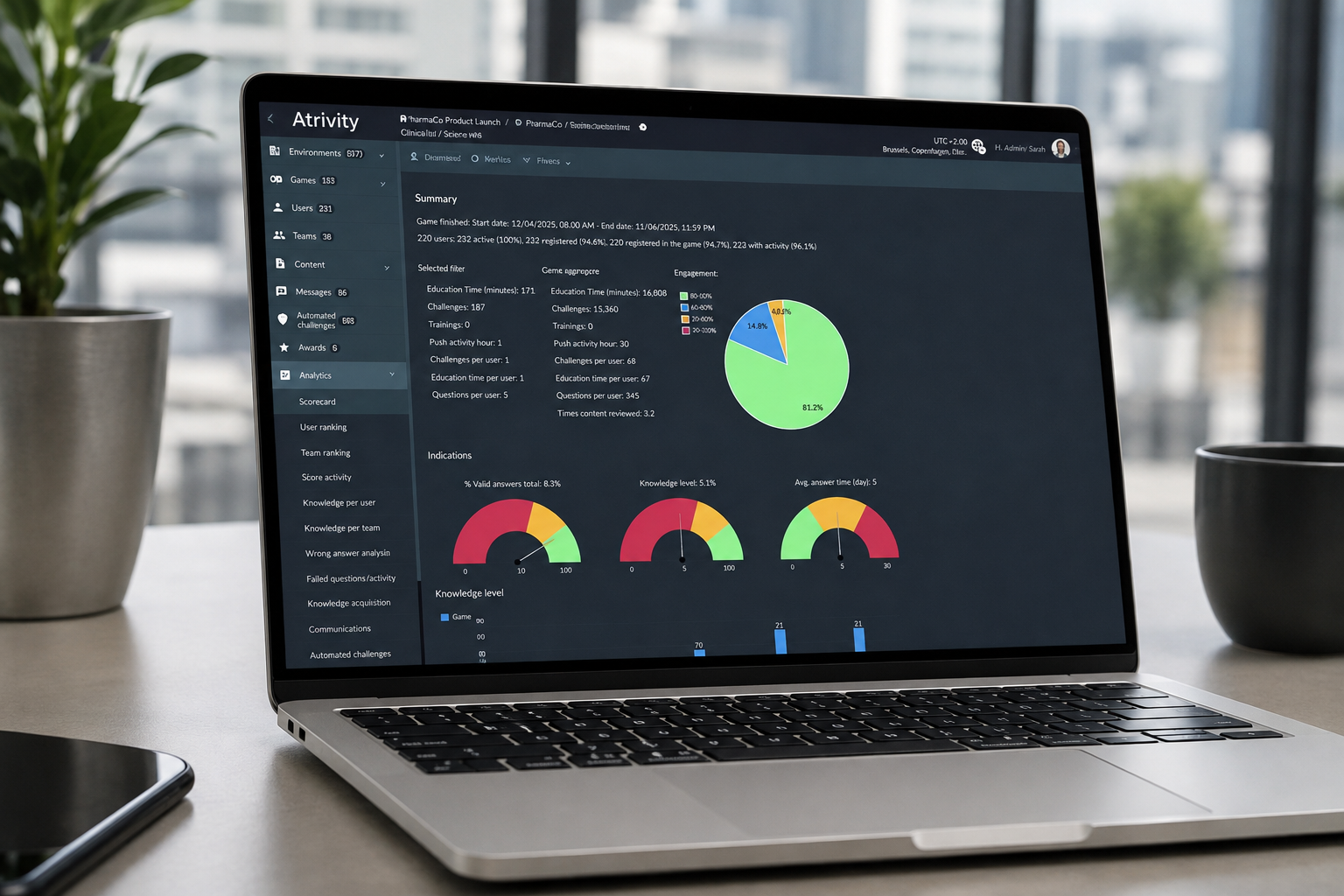
When participants answer questions, organisers see which concepts landed and which need more explanation. A question most of the audience gets wrong reveals a knowledge gap that would otherwise go unnoticed. That makes the interaction valuable on both sides. Participants test themselves and reinforce what they learned, while trainers and sales leaders get a clearer picture of the team's real knowledge level, not just its attendance.
For Pharmaceutical and MedTech organisations, where reps must communicate complex product and market information accurately, this feedback matters. The objective isn't simply to deliver information during the Cycle Meeting, but to make sure the field force can use that knowledge confidently afterwards. Based on our data, this kind of diagnostic typically surfaces around 16 critical gaps per rep per year, each one a message that could otherwise be lost in a customer conversation.
The learning experience can start before the Cycle Meeting
Engagement doesn't have to begin when participants enter the room. The run-up to a Cycle Meeting can be used to introduce key topics, share pre-reading materials or launch short challenges on the content to come. This gives participants a first interaction with the material and builds anticipation.
It also changes the role of the meeting itself. Instead of being the first moment teams encounter new information, it becomes the central point of a journey that has already started. For a product launch, pre-event challenges can refresh existing knowledge and flag the areas that need more attention during the meeting, so the information gathered beforehand shapes the agenda that follows.
Making the live event part of the learning
Keynotes and presentations remain essential, but they don't have to carry the entire burden of keeping an audience engaged. Short challenges between sessions give participants a reason to stay focused and inject energy into the agenda. Towards the end, a closing challenge on everything covered during the meeting is a memorable way to wrap up, and it serves a practical purpose too: the results give another read on how well the key messages were understood and which topics will need reinforcement afterwards.
The point is that gamification doesn't replace the existing Cycle Meeting format. It integrates into it, adding interaction where it has the greatest impact.
Extending the Cycle Meeting beyond the event
Perhaps the biggest opportunity is what happens after everyone leaves. A Cycle Meeting lasts a few days, but the knowledge it delivers needs to stay relevant for much longer. Once reps return to their territories, they start applying what they learned with healthcare professionals, customers and colleagues.
This is where reinforcement becomes essential, and where the gaps the meeting surfaced actually get closed. The messages introduced during the Cycle Meeting can be revisited through short digital challenges over the following weeks, fighting the forgetting curve instead of expecting people to retain everything from a concentrated burst. And when the game reveals a critical gap, Gap Fixing closes it: the rep receives personalised nano-content on that specific topic, with closure only counted when they answer 4 of 5 follow-up questions correctly. Done consistently, this reinforcement layer adds a measurable 18 to 20 point lift on top of the baseline.
This turns a Cycle Meeting from a standalone event into part of a continuous learning experience. The meeting is the central moment, but engagement and reinforcement continue before and after it.
Why gamification works particularly well for pharma sales teams
Pharmaceutical sales teams operate where knowledge is constantly evolving. New products, changing market dynamics, scientific information and internal strategy all have to be communicated effectively across geographically distributed teams. That makes engagement and retention particularly important.
Gamification makes learning more active without adding another layer of complexity to an already demanding programme. Participants interact through short challenges, get immediate feedback and see their progress, while organisations use the resulting data to understand participation and knowledge. For sales leaders, this connects engagement, learning and business readiness. The objective isn't competition for its own sake, but using competition and interaction as mechanisms that help people pay attention, remember and apply.
A Cycle Meeting that people participate in, not just attend
The traditional Cycle Meeting is built around bringing people together to share information. As organisations look for more effective ways to engage and train their teams, there is an opportunity to rethink what those meetings can become. A presentation communicates a message. A challenge asks participants to demonstrate they understood it.
With the right use of gamification, engagement can begin before the Cycle Meeting, continue through the event and extend into the weeks that follow. The result isn't simply a more entertaining meeting, but a more connected learning experience, one that gives participants an active role while giving organisers real insight into what their teams know, and a way to close the gaps that insight reveals.
For Pharmaceutical and MedTech companies, the next evolution of the Cycle Meeting may not be about presenting more information. It may be about creating more opportunities for people to interact with it, and making sure that interaction turns into readiness in the field.
Ready to Close the Gap Between Learning and Performance?
Discover how global organisations use Atrivity to turn knowledge into measurable business outcomes.
Try a Demo